-
Introduction
“The road to hell is paved with good intentions”
The desire for physical exercise and camaraderie led me to pick up basketball in the summer of 2025. After playing a few casual games, I realised the sport requires a certain threshold level of skill before a player can make a meaningful contribution. Football, for example, is different. You can get by with keeping things ticking - a pass here, a tackle there - some players are even designated with the responsibility of scoring. Basketball, with its smaller field of play and quicker pace, requires that every player needs to be able to make something happen. So I needed to practise.
Ball in bag, I would cycle to The Blue Cage, an outdoor court based in Deptford, South East London. My routine was simply to practise the act of getting the ball in the net from different locations on the court, measure my performance and then try to improve it on the next visit. Without a coach’s observation, I had to track myself both quantitatively e.g; the attempts it required to make 5 shots in a row from a specific place, and qualitatively e.g, the mechanical elements of my actions. After 5 minutes of messing around, I decided it was time to practise in earnest. I would use the iPhone camera to track my results. I would press record, turn the phone around, and move to my designated spot. Drill complete, I would shuffle over to retrieve my phone and check the recording. As I did this, as I started to watch myself, I would notice a change in my thinking. I began to understand that what I’ve created, by recording myself, is the raw materials of content. My actions, played back to me, have been flattened, digitised and ultimately “shareable”. An opaque mass of an “audience” forms in my mind - dark and infinite, ready to be impressed. I suddenly have an impulse to give this material up, turn the private into public, reap the rewards.
What lies at the centre of this impulse? Vanity or narcissism are ready answers, sharing brings attention, and attention feels good. But the idea stretches beyond that. I could leverage the hobby, produce content and turn it into an identity - a personal brand. I could post twice a week, updating people on my journey in becoming a better basketball player, developing a personal, relatable narrative. This could even lead me to become “a voice” in the sport at a local level, an expert on basketball culture. I could get recognition and opportunities, maybe even paid for my insight and fame.
I had to make a decision, keep the practice to myself, giving it the space to coalesce into routine and ritual, or share it, use it to gain recognition and open pathways to new opportunities. The former would be self-contained, the latter would transform the hobby from physical work to digital content. The purpose of going to the court would change from a desire to get better at something to a necessary step in the production of content, yet the positive potential continued to allure me.
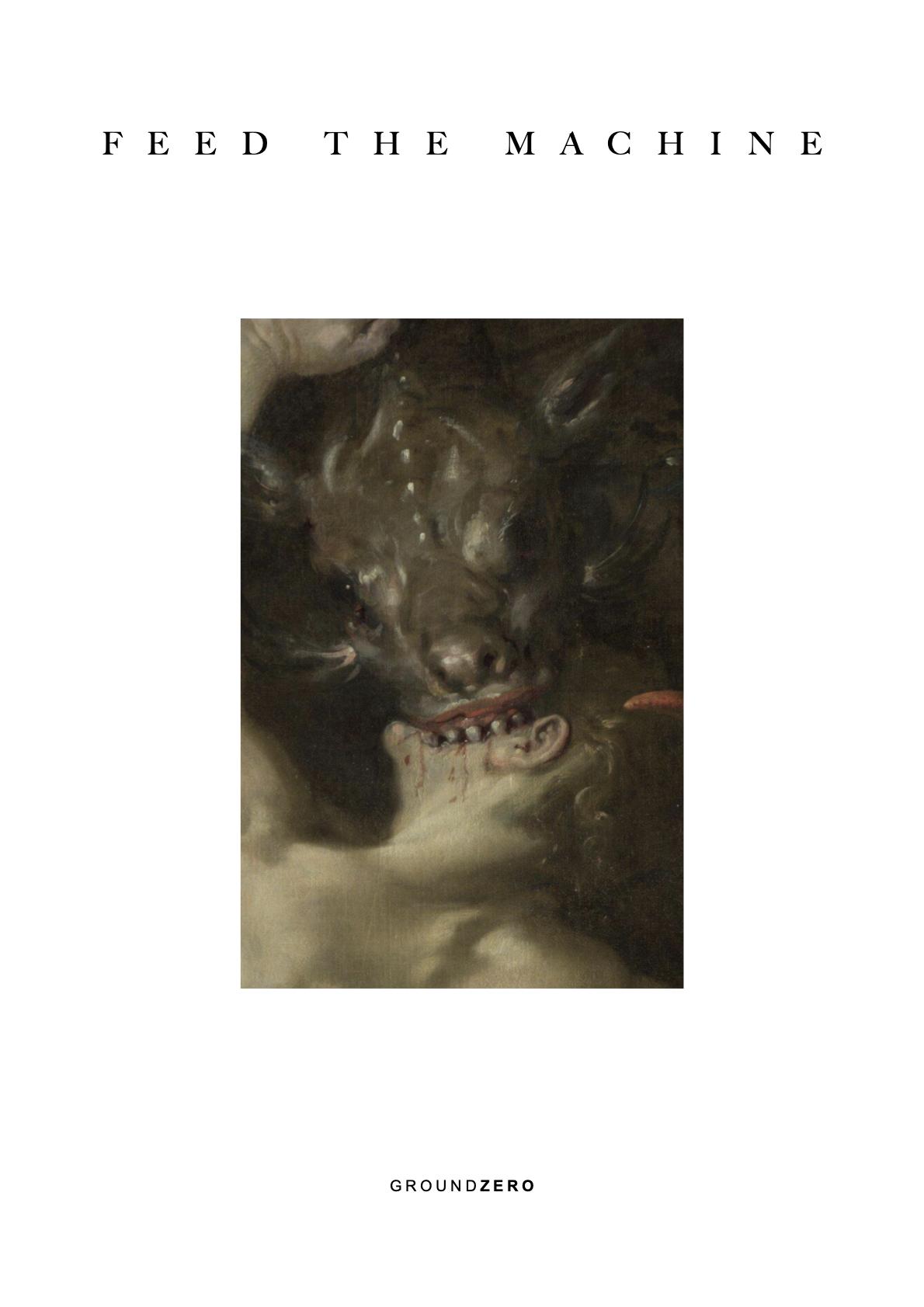
It struck me that “sharing”, the word used by digital platforms like Instagram when posting content like this, was not the right word. Sharing implied that only a part of my hobby would be given to another person or thing. Here though, I sensed that eventually I would have to surrender my entire relationship to the sport to content / algorithm machine. I would hope of getting something more valuable in return, recognition and opportunity, while also being conscious of transforming my relationship with the sport. It resembled an offering, a sacrifice.
Today, this logic of sacrifice is woven into everyday life for a particular unstable class stratum. Digital capital, the capacity for someone to gain and hold digital attention, has grown in power. It is more effective and it encompasses more parts of our everyday life. It’s no longer tied to a shady world of influencers. Artists must build digital capital, savvy politicians build digital capital, the next generation of Hollywood directors are emerging from YouTube shorts and therapists are utilising Instagram to build credibility and find clients. To not engage in the acquisition of digital capital is to miss out on opportunity.
Towards the end of a recent seminar entitled “Content Creation and the End of Social Media” Catherine Knight Steele, the moderator, asks:
“what it does for our identity to be a part of a society where content is the expectation in these socially mediated platforms…. What is this doing for us and our sociality?”
I believe this ambivalence, this strife between self-actualisation and self-exploitation, is the defining feature of our relationship with technology. It shows up in the impulse to offer ourselves; our passions, our practice, our thoughts, our taste and our ideas to a machine in exchange for opportunity and recognition. For, in unstable times, digital capital has become a tool for a robust life. Giving platforms what you have to offer in exchange for digital visibility is a shrewd investment. On the other hand, what we give transforms what we do; art becomes content, knowledge becomes “takes”, communities become brands, sacredness is eroded in the process of the offering.
My question is not about the online inauthenticity - this is a well-trodden path. My concern asks why do we, when looking for and finding something that is stable and sacred, see it immediately as a material for production? What happens when digitisation is both the mechanism to achieve recognition and stability yet the threat to our concept of self-hood and autonomy?
Freedom Crisis
The unstable (to be clear, not endangered) class stratum is the educated middle class. This class has reached a point of freedom and flexibility such that life has blurred together - become a crossroads of economic, social and emotional instability. Where neoliberalism weakened socio-economic infrastructures, these weakened socio-economic infrastructures led to a freedom & flexibility, but also personal insecurity. New frameworks in work, living and relationships took the place of these weakened traditions. Framed in the positive, these individuals enjoy higher personal agency than their mired predecessors. They have the power to reorganise the rhythm of life to individual circumstance. Framed in the negative, these same individuals are plagued by anxiety and fatigue from a life where too many choices need to be made and personal responsibility becomes burdensome. In The Corrosion of Character (1998), Richard Sennett outlines the negative effects of a then emerging flexible labour market:
“People don’t know what risks will pay off, what paths to pursue….How can a human being develop a narrative of identity and life history in a society composed of episodes and fragments?”
When every tie to society is flexible, when people are no longer anchored by tradition, they lose their points of reference - they struggle to place themselves in the world as a social and economic actor.
Though this anxious effect has been most acutely observed in the labour market, where structural changes, such as a shift to hybrid working and contract based work, are plainer to see, other facets of everyday lifestyle have become flexible, fuelled by a blend of digitisation and individualisation. We no longer look to traditional institutions - a profession, a house, a club, a family, to situate ourselves in the world. These have become liquid, prone to the shifting whims of the market and our attitudes. Therefore, we must be flexible, we must innovate. Each new day presents us with new ways to live life; new ways to construct, build and define good relationships, new ways to consider autonomy over our bodies in an effort for health and wellness, and new approaches to work/life balance. There is no standard, no template, only the individual ideal, and it is our responsibility to find it.
In the positive framing, we do not see it as a burden. For the educated middle class believes that “this life should be successful and bring with it a high degree of social status and social recognition” (Reckwitz 2021). We strive for the better option, the better outcome. It is not enough to choose, it must be the best, most individual path - it is your path towards a life of success, status and recognition. Singular and unique, but above all not fixed. Though this freedom is almost exhilarating when moving forward, the problem arises when we look for a place to land. How can one recognise oneself as a valued member of the tribe if there is no consensus of what being a valued member of the tribe entails? How do we know where we are? With no templates to adhere to that can provide the reinforcement, both to yourself and to others, that life is on the right track and the checkpoints have been reached, being a valued member of the tribe means being wholly yourself. This is the societal checkpoint of neoliberalism. If there’s is no longer any frame to slot into - one must stand out. Life becomes a constant project fuelled by rampant self-reflection. The dark underbelly of suburban lifestyle that plagued the (mostly male) protagonists of Yates, Mailer and Updike are mirrored in the dark underbelly of complete freedom and flexibility that plagues the modern protagonist: weariness, disappointment, and the hollow feeling of never being in the place that one ought to be. This class has the need to constantly project itself on to the world, because there is no external expectation. In the midst of this, we look for ways to feel secure in this state of insecurity - and to have power/control over it.
Digital Promise
In that post-war era of the authors mentioned above, the same educated middle class aspired to a conformity, it was an ideal transmitted by mass media - TV showed everybody the same way to live and the right products to buy. In our late modern era, where people aspire to individuality, the ideal delivered through individual digital profiles and algorithm driven social networks.
Since the end of the Covid-19 pandemic, we have been living in the afterburn of a super acceleration of digitisation. Digital processes have embedded themselves into new spaces and online networks dominate more of our everyday lives. Online existence, previously fragmented, is all-encompassing. The digital profile, a holistic digital footprint glued together by a personal brand, is a place now where we can be a potential employee, a potential partner and a potential ally to an infinite audience at any time.
Due to this increase in power and scope, the digital profile is the central battleground for security and recognition, an effort to reaffirm where we are to ourselves and others, and win opportunities based on this position. The practice of maintaining a digital presence is no longer the sole realm of influencers and brands. Bishop’s concept of Influencer Creep - built upon a drive for self-branding, platform optimisation and performed authenticity - is an active investment to increase security in insecure times. Even in an arena as seemingly meritocratic as sports, ‘It pays more to be a crap runner and good on socials’. In sports, digital capital can be more effective than performance.
Digital capital makes us more visible for opportunities, and secures our social identity as someone who is unique and authentic, achieving the status that the modern middle class aspire to. The digital self is capable of representing the ultimate self, the most curated and rounded version of self. It is able to display all interests at once with boundless efficacy. It is the tool in which we can carve our ultimate image - and gain recognition and status due to the power of that image. A refusal to participate in the generation of digital capital leads to invisibility, which adds to insecurity. Invisibility, opting out of digital capital, is a downward slope to death. Only those with enough foundation, namely, the upper class, can afford not to play as, barring disaster, nothing can negatively affect their current status.
The acquisition of digital capital thus becomes an attractive way for the late modern protagonist to stave off anxiety of choice and freedom in a liquid world. Liquid life turns us all not only into lifestyle shoppers, as Bauman would put it, but lifestyle influencers - being visible in digital spaces is no longer an exercise in vanity or even social connection it is both an investment and a productive force. Here we reach the first level of ambivalence - The force of digitisation accelerates insecurity contextually, yet can be a tool of salvation.
Emotional Labour
If I were smart I would’ve used this work as raw materials for the production of my own digital capital. It would have been a social media “short" with a talking head and a miniature microphone. My references would be props in my video, edited slickly for digital engagement. I would speak directly to you, I would say, “this is why you’re feeling ambivalent about your relationship with technology”. You would have stumbled across me, thanks to powers unseen. I would’ve needed to work for you to see me. Here, being visible, generating digital capital - is a result of labour, not of social standing.
In a bygone era, digital capital was intrinsically tied to the social circle. Popular people, by definition, have a wide social circle, and this translated in to the digital sphere where they also had a wide social network. Virality, a violent untethering from the social to the public, was a freakish accident, an unexpected event. Now we are all dislodged from the social. The introduction of the algorithm fundamentally ruptured the connection of real life and the digital. A machine powered by an algorithm means that digital capital, that tool of security, is no longer related to one’s peers. The algorithm is an alien component, it transposes our personal connections or “friends" into an infinite, muddy audience. It’s governed by shadowy aesthetic preferences, and driven on it’s affect on other users. In short, the introduction of the algorithm detaches digital capital from social and flips the power structure between man and machine. Now the machine, not the social, is in control of the distribution of digital capital. In order to play individuals must subjugate themselves, not out of external force nor discipline, but by a conscious effort to gain power in an unstable situation, in order to play. In order for us to produce digital capital we must struggle to be visible.
So investment in digital capital now requires labour. The authenticity and recognition, no longer lies on the surface with your accolades and amount of connections - it must be raised to the level of the public through the production of content. Decades of experience in a chosen field cannot simply be stated - it has to be mined for insights, packed, presented and performed. The labour is orientated to an unknown, possibly infinite audience. Though the audience is somewhat abstract, we are aware we have to move it with affect - it needs personal depth (“So what’s your take?”, “What did you learn”). We must excavate our interests, our passions to offer up more affective, more unique, digital productions to gain digital capital. The labour is personal, it is biopolitical. This is why so much of the content is reflexive, powered by the visage that appears when we turn the production of content to ourselves, our inner lives. This labour renders all of human experience raw material. Experience leads to production which leads to the act of sharing in the hope of gaining recognition and opportunity in an increasingly unstable world. We adopt the machine’s gaze because it is beneficial for us. The machine offers the potential of stability, but asks us to offer up ourselves in order to reach it. This is the promise.
This dual mechanism of sacrificing to get more is made more potent in our new interactions with AI. AI, specifically LLMs like ChatGPT and Claude function, and are advertised, as digital companions. I am astounded how easy it is to fall into the action of conversation instead of instruction. However, these companions can only help you as much as you feed it. The more detailed the prompt, the more accurate the response is said to be, so we offer up more of our secrets. On a macro level, the more the companion knows about you, the more of a “companion” it can become. So there is a trade-off between interiority and productivity. It encourages you to share how are you feeling, what are you thinking, and turns it into a hollowed version of productivity. If social media turned authenticity into performance, AI turns interiority into data. The immaterial made material.
For this class stratum fixing their position in the world, feeling that a “place” has been reached, a place that would give you recognition and opportunity now requires labour. It requires a performance. Here lies the balance of the ambivalence. Opportunity and recognition on one side, self-exploitation and subjugation on the other.
Bad Sacrifice
What is the result of this biopolitical labour? If the machine favours us, we have got what we wanted - but that doesn’t explain how the relationship with experience changes as we turn them into offerings. Fundamentally, the acquisition of digital capital perverts our actions. If influencer creep shapes artwork, i.e changing how an artwork is made, what type of art an artist makes, then this same creep will shape our own behaviour.
Analogue practices, whether that’s writing, working or playing basketball, have ends in and of themselves. Someone might write to express inner thoughts, work to hone their craft, play basketball to clear their head. When these behaviours are orientated to digital capital, these ends are perverted. The writer, for example, turns to Substack to stabilise their standing and garner digital capital in the writing world. They seek both economic gain (“I could have my own audience I can monetise ”) and a social one (“I will be visible as a writer”). The everyday practice of writing becomes orientated towards visibility on Substack. As a platform with an algorithm - Substack has various preferences that contribute to visibility. It rewards regular output, an element of timeliness or contemporariness, and it favours writing with affect as with all platforms. This shapes what the writer decides to write about and when they publish. Secondly, Substack gives the writer a line to an amorphous audience. The act of writing, which could’ve become a ritual, now becomes the practice of producing content. By sacrificing their words to the machine, the writer erodes the potential of writing to become a ritual that can define their place in the world.
The machine demands novelty. When we orientate our actions to the generation of digital capital, we become wary of repetition. Each sacrifice needs to be new, each collected object, each dinner, each holiday. This constant novelty means we never feel grown-up or stable - a perpetual mode of youth which is the antithesis of stability. We do not return to places we have been before, we bore of things, we refuse to engage in things that feel permanent. The writer at a newspaper shouldn’t rest content on the role and salary they have acquired, they should look to innovate, develop digital capital on Substack and Twitter, write about different, newer things, write in newer ways. This compulsion, driven by the desire to appease the machine, leads to both exhaustion and frustration - enforced innovation in production of content is no way to build a stable life - we are forever “emerging”. By orientating towards digital capital our practices do not have time to become part of our identity. True stability, recognition and status, even to ourselves - comes from an understanding of repetition, practice and permanence. It is in things fixed that people find stability and their place in the world. Stability comes from a sense of permanence “I have this house for the rest of my life”, “this job sets me up for life” “no body can take this achievement from me”. Stability means staying.
The relationship between the subject and the machine becomes a positive feedback loop that further detaches us from our peers - people that can help garner recognition and lead us to opportunities. The more we feed the machine and tie ourselves to it, the further isolated we are to people that could provide us with a sense of self and stability. In the first sense, people that gain stability by generating digital capital feel pressure to orientate their life to generate even more digital capital. Activities that start as still image updates become short videos, videos become content, content becomes a series, a series leads to a digital brand partnerships etc. These continuously face inwards. In the other sense, the non-influencer erodes their community and collaboration framework by orientating towards building digital capital in the machine - they become an island. Instead of finding a community and partners, followers and views are sought. In the ecosystem of publishing for example, a writer securely embedded could say - “I am a writer - X is my editor, Y is my publisher, I speak to A and B to discuss what I’m writing”. If however their editor is Claude, if their publisher is Substack - the protagonist is isolated and more reliant on the machine. They are in fact more unstable.
Fourthly, the machine runs on affect, so causes us to go deeper into emotions, commodify our subjectivity and sacrificing our vitality. We are driven further into the hunt for our own special brand of affect - rarity in products, emotional potency, authentic cultural experiences - and they pass through us and straight to our “audience”. We become drawn to experiences that either promise feeling, or bring a feeling that is easy to package and present. Raves are fun, art exhibitions are interesting, travel is explorative. By orientating a life to the generation of digital capital we jump from emotion to emotion, affect to affect, eroding the possibility of contemplation, ambivalence and a change-of-heart. One can never come to appreciate something - because ambivalence is ineffectual in the machine. It must affect immediately.
—-
Turning the practice and ritual of basketball into content would not make me a better basketball player - I become the basketball creator, not player. Its emotional affect is transferred from me to the machine. Feeding the machine, for all the rewards it may give me of digital capital - fundamentally alters the relationship of experience to humans, and I hope in this essay I have articulated why. Why the quest for digital capital is most often a futile sacrifice, one that ultimately makes us more insecure. By building digital capital , we offer our interiority, perverting the very source of recognition and opportunity. The protagonist, that person made liquid by neoliberal culture, rendered anxious, has now, by orientating life to the production of digital capital become gas.
——
-
-
Ground Inc ©